

Stop selling sponsorships. Start building growth engines.
Editor’s note: As the Shepard Strategic Services team, we have a front-row seat to the shifting event landscape, and over the last year we’ve seen a handful of trends emerging that are changing the way our partners approach the business. A recent study1 from our Solutions Network partner Showcare shines a light on the evolving world of sponsorships and what’s on the horizon. Here we break down the top takeaways to transform your business.
For years, sponsorship sales have followed a familiar formula: Sell the booth, renew the package, add a few logo placements (maybe layer in a speaking opportunity if the budget allows).
It works. In fact, it works well enough that many events sell the majority of their exhibit space during onsite selection before this year’s event has even ended.
So why change it?
Because sponsors have changed.
Today’s marketing leaders aren’t simply looking for visibility. They’re looking for partners who understand their business objectives, connect them with the right audience and can demonstrate measurable business impact. In other words, they’re buying growth—not inventory.
That shift represents one of the biggest opportunities for event organizers today.
Sponsors are asking better questions
As sponsorship investments become more scrutinized, expectations continue to rise.
Sponsors want opportunities tailored to their business goals. They care more about the quality of the audience than the size of the attendee list. And, perhaps most importantly, they expect meaningful proof that their investment delivered results—not just a post-event impression count.
Meanwhile, many organizers are trying to meet these expectations with lean teams while facing increasing pressure to grow sponsorship revenue year over year.
It’s a difficult equation to solve using the same sales process we’ve relied on for decades.
The problem isn’t the booth selection process
There’s a temptation to think the solution requires reinventing exhibit sales.
It doesn’t.
Priority points, onsite space selection and structured appointment schedules continue to create urgency and drive impressive renewal rates. Those systems shouldn’t disappear simply because the industry is evolving.
The real opportunity lies in everything surrounding the transaction.
Too often, sponsorship conversations begin and end with booth placement. By the time organizers circle back to discuss marketing goals, audience strategy or activation ideas, many of the best opportunities have already passed.
Instead of treating space selection as the finish line, organizers should view it as the starting point for a broader growth conversation.
Experience design is becoming a revenue strategy
One of the most compelling ideas emerging across the events industry is that sponsorship value shouldn’t start with available inventory. Rather, it should start with attendee intent.
What are attendees hoping to learn? Where do they naturally gather? Which moments create the strongest engagement? How can sponsors enhance those experiences rather than interrupt them?
When organizers begin by designing exceptional attendee experiences, sponsorship opportunities become significantly more valuable.
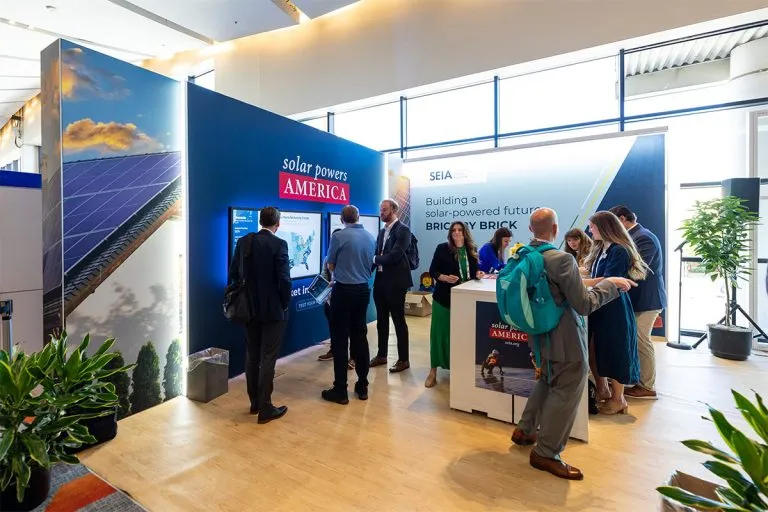
Networking lounges, innovation hubs, demo theaters, curated buyer meetings and micro-learning stages aren’t simply new sponsorship assets. They’re experiences that create value for attendees while delivering deeper engagement for sponsors. It’s a natural win-win.
AI isn’t replacing sponsorship sales
Every conversation about the future eventually turns to artificial intelligence (AI).
But perhaps the biggest misconception is that AI will automate sponsorship sales.
The more interesting opportunity is that it makes sponsorship teams dramatically more informed.
Imagine walking into every sponsor meeting with an automatically generated briefing that includes recent product launches, hiring trends, previous event participation, audience alignment, historical investment levels and personalized activation recommendations.
Instead of spending hours gathering information, sales teams can spend their time asking better questions and building stronger relationships.
AI also creates consistency across lean organizations by helping prioritize accounts, identify growth opportunities and recommend next-best actions. Rather than replacing consultative selling, it makes consultative selling scalable.
Measure what actually matters
Another post-event evolution is happening around measurement. Traditional recap reports often focus on activity metrics—badge scans, impressions or booth traffic. While useful, they rarely tell the full story.
Sponsors increasingly want to understand the quality of engagement: Who did we meet? Did we reach the right audience? How much time did attendees spend engaging? What conversations led to qualified opportunities?
Those insights don’t just justify this year’s investment. They become the foundation for next year’s renewal conversation.
Measurement shifts from proving activity to demonstrating business value.
The future belongs to growth partners
Perhaps the biggest shift in thinking is this: organizers don’t need to abandon the systems that already work —they need to surround them with more intelligence.
Modernize without breaking the model, following these pillars:
- Protect the renewal process.
- Layer in sponsor research.
- Design experiences around attendee needs.
- Connect sponsorships to measurable business outcomes.
Feed those insights back into the next sales cycle.
The organizations that make this transition won’t simply sell more sponsorships. They’ll become strategic growth partners for the brands they serve—and that’s a much more defensible position than selling another square foot of exhibit space.
Sources
Further Reading and Inspiration
- What’s driving event strategy now: notes from four industry events — Cory Smith, VP of Strategic Services, on the trends surfacing across SISO, ECEF, and Fastest 50.
- Experience is the strategy: inside Shepard’s experiential design framework — Our principles for designing an event experience around attendee intent.
- Brand activations and community: what we’re learning by showing up at industry events — What makes an activation worth participating in.
- The Inspiration Playbook — Activation concepts for organizers building audience-first sponsorship opportunities.
- Shepard partners with Backtrack to bring AI-powered meeting intelligence to the events industry — AI notetaking that turns event conversations into CRM-ready follow-up.

Shepard is a full-service event production company. We design, develop and manage trade shows, corporate and other events throughout the U.S.