

The evolution of AV technology: 5 trends we’re tracking in 2026 

Experts consulted for this article:

Picture of Ryan Pulawski

Ryan Pulawski

Director of Business Development
Shepard AV

Picture of Clinton Tyler-Martin

Clinton Tyler-Martin

National Sales Manager
Shepard AV

Picture of Clay McDaniel

Clay McDaniel

Director of AV Technology
Shepard AV

Picture of Mary McKinnon

Mary McKinnon

Senior Director of Sales
Shepard AV

Back in 2023, we wrote that the LED revolution was in full swing, with lower costs, dynamic content capabilities, structural versatility, and a growing interest in sustainability driving the technology’s adoption.

Three years later, LED video walls are more reliable and more widely available than ever. Meanwhile, AI tools are being used to transcribe meetings and live-translate presentations. On the audio front, centralized presentation management tools are making shows run smoother, and the speaker systems we deploy pack more punch with less power and are easier to rig. 

The common thread: AV technology is now more affordable, more capable, more energy-efficient, and more accessible than it was even a few years ago. For our organizer customers that’s translated into clearer images and sound, better communication, and better experiences for their attendees.

Some of these technologies have been around for a while and are only now coming within reach of more modest budgets; others are still quite novel and worth giving a try for your next event. All of the tech we discuss was deployed across multiple shows this year, from DC to Orlando to Houston to Los Angeles, and everywhere in between. (Shepard AV operates in every major event venue in the United States.)

Here, our AV and Production leaders reflect on what we put to work in 2026, and the problems we solved along the way.

What's covered in this article:

1. More reliable and affordable LED walls

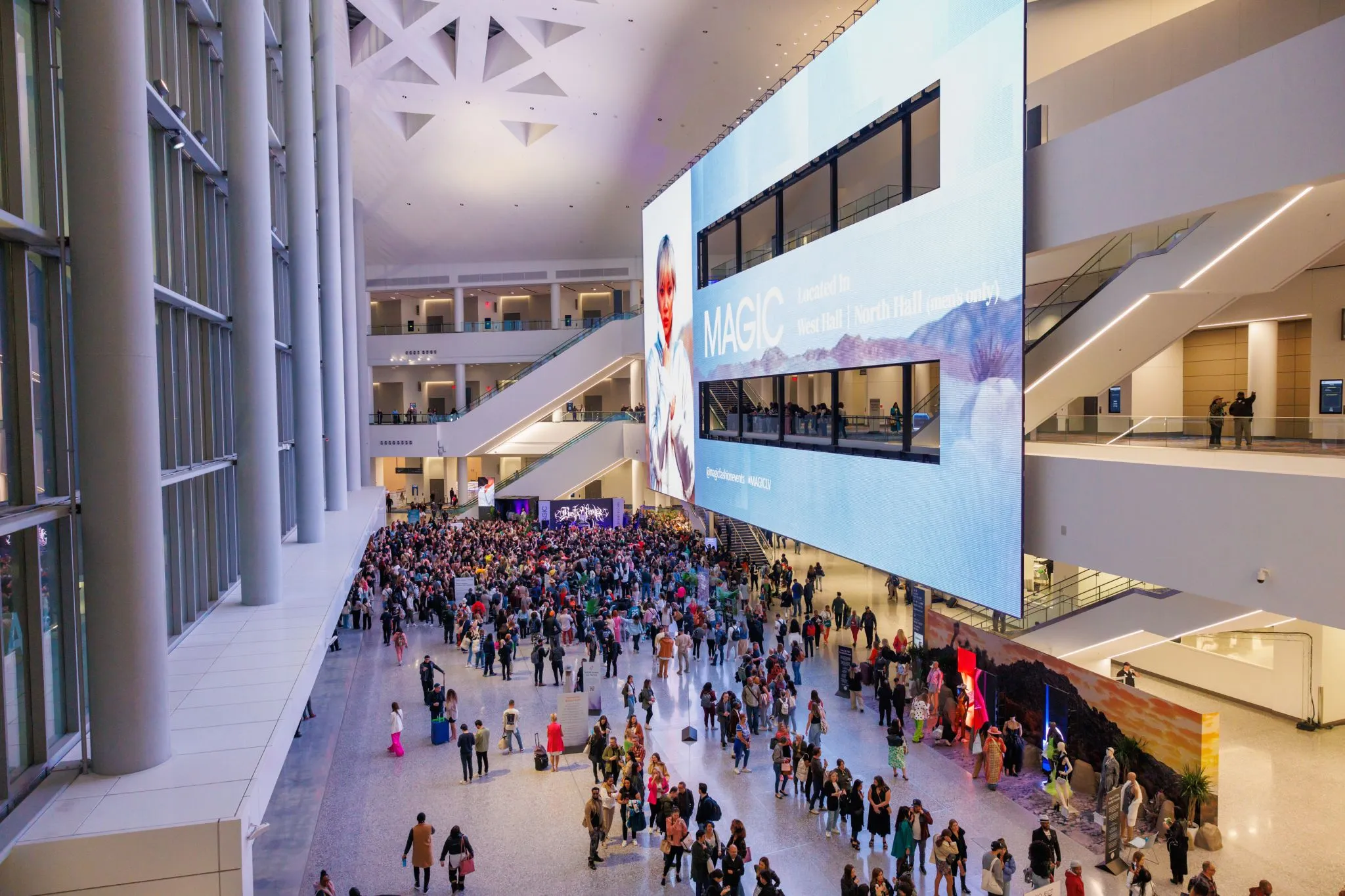
Busy entrance hall into the event with an LED structure showcasing branded video clips
An LED-tiled structure showcasing branded video clips at the Las Vegas Convention Center

LED video walls used to be a luxury that only the biggest corporate and conference budgets allowed for. That has changed. Prices have come down to the point where an LED wall now costs about the same as a traditional projection setup, or not much more, Ryan Pulawski, Shepard AV’s Director of Business Development, explains. Pulawski would know: he’s been in the AV business for over 20 years and was an early adopter of the technology. LED tiles are a lot more reliable than they were in the early days of LED, less prone to glitching, and offer better brightness and longer lifespans than traditional projector bulbs.

With LED walls serving as the central visual backdrop for the modern general session stage and even being used to animate entrance units (see above), it’s up to designers and graphic artists to fully realize the new creative possibilities, whether that’s still images, animations, high-definition video, or cinematic transitions when different presenters take the stage.

That creative flexibility is now supplemented by AI tools. Clay McDaniel, Shepard’s Director of AV Technology, shares that we’ve now used AI to generate custom LED wall backgrounds during live sessions at events in Orlando, Nashville, and San Antonio this year. The goal is not to replace the artistry of the designers we work with, but to have the option to improvise custom material and variations from a predefined palette of brand and event imagery.

Communify Experience, Faena Forum, Miami Beach - backstage view from the console

Solving for Pixelation

One idiosyncrasy of LED walls is that they can look pixelated from up close. That's where a little fine-tuning is called for. A 5- or 7-mm pixel pitch — that's the term we use to describe the distance between pixels — is going to work well for an outdoor event or in a large hall, where the front row is sitting about 30 to 40 feet back. But for a more intimate space, like the Faena Forum in Miami Beach where the Communify Intelligence Experience was held this year, our client required excellent resolution from 10 feet away. We ended up using a 1-mm pitch to render pixel-perfect graphics and high-definition video from super close up. It's a delicate and expensive technology, notes Pulawski, but sometimes nothing less will do.

2. AI-assisted closed captioning and live translation for accessibility

The traditional approach to live session translation is a bilingual interpreter who listens to the audio feed and speaks the translation into a microphone. That’s still the gold standard when the budget allows, and we’re not suggesting that AI should replace interpreters across the board. But sometimes the budget isn’t there, and for less common languages it can also be hard to find an interpreter nearby. In those cases, AI can listen to the same feed and produce live closed captions in dozens of languages.

Clinton Tyler-Martin, Shepard AV’s National Sales Manager, sees AI-powered subtitling as a real step forward for accessibility, and a natural fit for an industry that’s by nature multilingual and multinational.

At the recent National Association for College Admission Counseling (NACAC) show at the Minneapolis Convention Center, we provided multilingual closed captioning to support attendees whose first language isn’t English. This is a great tool to have when your audience is coming from around the world, as is the case with NACAC, whose international branch represents more than 140 countries. Captions also improve accessibility for attendees who are deaf or hard of hearing.

AI-assisted closed captioning in action at NACAC 2026, general session stage

3. AI-assisted content capture and streaming

Captioning isn’t the only way AI is making content more accessible. Streaming has become a standard part of most shows we produce; what’s new is the addition of AI tools that centralize and speed up processing. We can now capture video and audio from multiple rooms and prepare the recordings for broadcast or upload to streaming platforms, all from one central location.

That opens up a lot of options for organizers: clips for social media and the organizations’ websites during and after the event, on-demand viewing for attendees and people who couldn’t attend, and continuing education credits. Many of the professional organizations we work with offer online learning and credentialing resources to their members.

McDaniel also notes an uptick in clients using Microsoft Teams or Zoom to gather transcriptions from multiple meetings and then using AI to summarize them and distill talking points for their closing meetings. This is an example of how AI tools are giving organizers the ability to shape content in real time.

Related Content
Shepard partners with Backtrack to bring AI-powered meeting intelligence to the events industry

The platform automatically records, transcribes, and analyzes scheduled meetings, turning conversations into structured summaries, buyer insights, and clear next steps that sales teams and organizers can use after the show closes. Learn more

4. Digital consoles, wireless mics, and advanced frequency coordination software

Today’s digital audio consoles have EQ, compression, and gating built in, so there’s less outboard gear to haul to shows than in decades past. Auto-gating is especially useful for panel discussions with lots of open mics on stage. The console opens each mic when someone speaks into it and automatically closes it when they stop. Paired with a skilled engineer on site, this cuts down dramatically on feedback, which can mar a presentation and completely derail a live musical performance.

With digital audio consoles and wireless microphones now commonplace, managing wireless frequencies so microphones don’t interfere with one another has become a complex planning consideration. Larger events at venues where multiple AV crews are working simultaneously require even more careful planning.

Pulawski recounts with pride how at KCON, the world’s largest festival of K-Pop music, held at the Los Angeles Convention Center this year, his team ran four stages with dozens of wireless mics, LED walls and projection, using well over 100 wireless channels. The K-pop singers may have been the stars of the show, but behind the scenes the unsung hero was the Shure Wireless Workbench, the frequency coordination software we use to see which frequencies are already in play — including by other groups in adjacent halls — in order to ensure our mics are assigned to open channels.

The Shepard AV team used frequency coordination software to keep wireless microphones from interfering with one another at KCON 2026, Los Angeles Convention Center

Digital tools are making life easier for presenters, too. Tyler-Martin notes that at NACAC the organization benefited from centralized presentation management software paired with a speaker ready room. The speaker ready room gave presenters one place to check and load their files before their sessions. This addressed the problem of last-minute file changes and delays at the podium, a common pain point among meeting planners and organizers. It also allowed us to reroute files to different breakout rooms on the fly based on shifting crowd sizes.

A presenter reviewing their slides at the Speaker Ready Room at the Minneapolis Convention Center.

What is a speaker ready room?

A speaker ready room is a quiet, dedicated space at an event venue where speakers can prepare their materials and get in the zone before taking to the stage. In the entertainment world it's known as a green room. In the corporate and trade show event world, we usually refer to it as a speaker ready room. Most speaker ready rooms feature a live feed of the main stage, and computers linked via a central server that can push a slide deck directly to the stage or breakout room where a speaker will be presenting.

5. Lighter, more energy-efficient speakers

Finally, we’re excited to share how we’ve deployed the new L-Acoustics L Series speaker system at recent special engagements. This isn’t the most glamorous new technology, but we love it because the speakers are lighter, more energy-efficient, and save our customers on rigging costs, while giving us concert-grade sound over a wider area with less speakers, according to Pulawski.

The L Series system is built around Progressive Ultra-Dense Line Source (PULS) technology, which packs massive power and precision into a dramatically smaller, lighter, and faster-to-deploy speakers. It gets bonus points for saving our lower backs.

Beyond the rigging savings, the smaller footprint keeps sightlines to the stage clearer, a win-win for the production team and audience members alike.

Thanks for reading!

Stay tuned for deeper dives into everything we discussed here. And don’t forget to subscribe to the Shepard Insider, a newsletter of strategic event intelligence and expert insights we typically reserve for our clients. Delivered quarterly straight to your inbox.

Need AV & Production expertise and problem-solving at your next event? Not sure if we service your venue? Check out our Top AV Questions Answered. See examples of our work in motion below, and get in touch here .

Shepard is a full-service event production company. We design, develop and manage trade shows, corporate and other events throughout the U.S.